Why the Caribbean coast of Costa Rica is the worldschooling location that other hubs cannot replicate
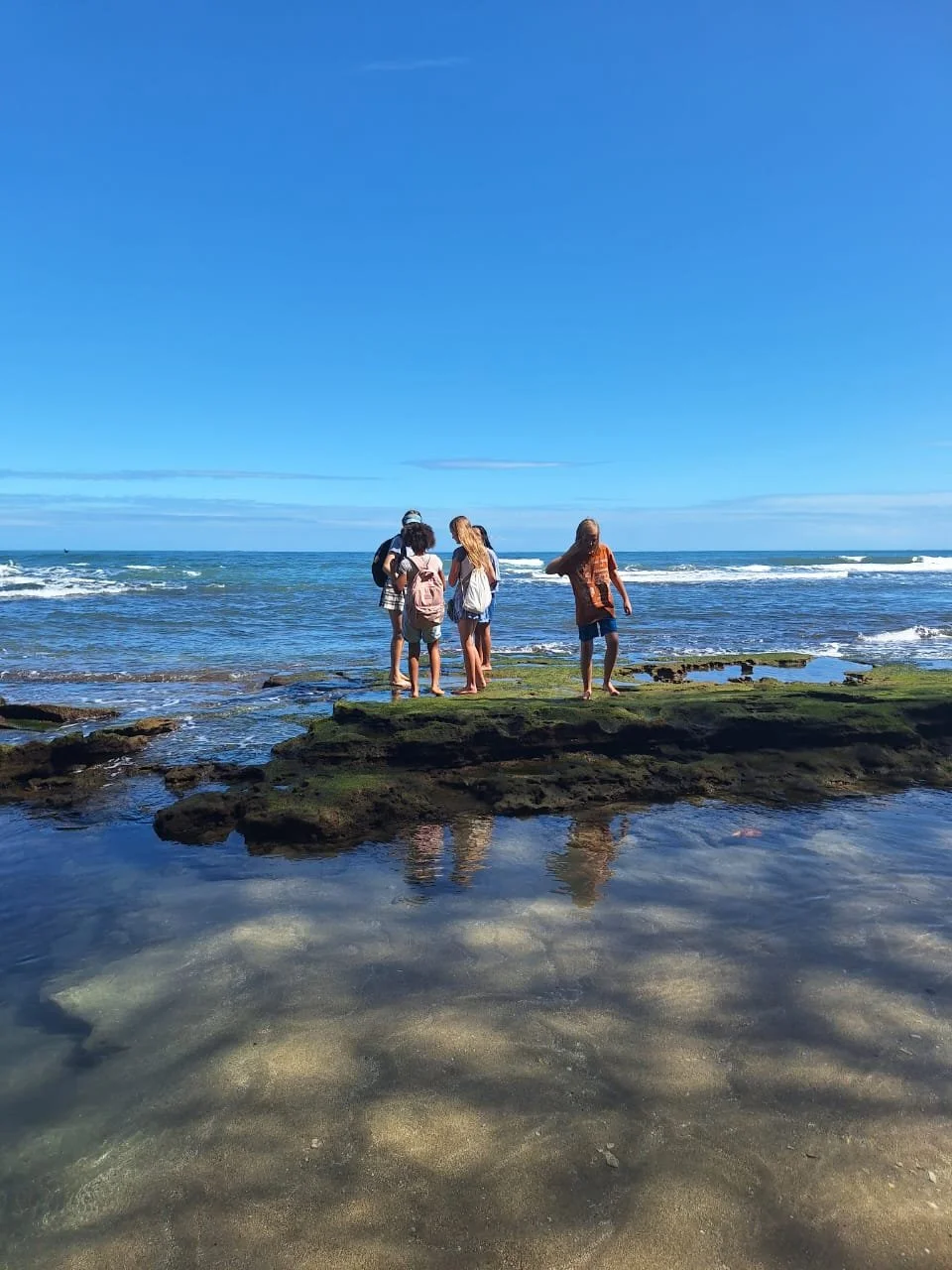
Costal Conservation Session on the Caribbean Coast of Costa Rica
Families planning worldschooling in Costa Rica almost always end up on the Pacific side. The volcanoes, the national parks, the well-worn family travel routes. We understand the pull. We also know what they are missing.
Costa Rica is one of the most searched destinations in worldschooling circles, and rightly so. The biodiversity alone makes it a living curriculum. But there are two coasts, and they are not the same place.
The Pacific coast has the infrastructure. The resorts, the guides, the established tourist economy. Families pass through Manuel Antonio, climb around Arenal, catch sloths on cue at well-managed parks. These are genuinely good experiences. They are not, however, what we are talking about when we talk about place-based immersive learning.
The Caribbean coast of Costa Rica specifically the Talamanca region, stretching south from Puerto Viejo toward the Panamanian border is something entirely different. It is less visited. Less polished. And for the families who find their way here, often the most significant thing they have ever done with their children.
We have lived here for decades. What follows is not a travel guide. It is an honest account of why this particular coast, at this particular juncture of culture and ecology and community, offers children something that cannot be manufactured elsewhere.
The two coasts of Costa Rica are not the same country
Costa Rica is a small nation, but the Talamanca Divide — a mountain spine running the length of the country, creates two genuinely distinct ecosystems, climates, and cultural histories on either side. Most visitors, and most worldschooling programmes, stay west of it.
The Pacific has the dry season. The clear-skied months from December to April when the roads are passable and the sunsets are reliable. Tourism infrastructure built itself around that predictability, and the Pacific coast became what people picture when they picture Costa Rica.
The Caribbean operates on a different rhythm. The rain comes differently, more sudden, more theatrical, and then it passes. The vegetation is denser. The wildlife is less managed, more present. The cacao grows here because it needs this humidity. The coral reefs are among the most biologically diverse in Central America. And the human history of this coast the Afro-Caribbean communities who have been here since the nineteenth century, the BriBri and Cabécar Indigenous peoples who have been here for millennia, is layered in ways that simply do not have an equivalent on the other side of the mountains.
When children learn here, they are learning within a place that has not been organised for their learning. That is the distinction that matters.
Five classrooms that cannot be replicated anywhere else
We use the word classroom loosely, deliberately so. These are not rooms. They are living systems, working kitchens, ancestral territories, underwater ecologies. They are also the five things that grounded Cacao Coast Classroom from the beginning.
The cacao farm
There is no better classroom than a cacao grove, and we will happily argue that point with anyone. A single cacao pod contains a complete curriculum: botany, fermentation chemistry, food economics, Indigenous land stewardship, the history of the chocolate trade, the culture of a region. You can read about all of this. You can watch it on a screen. You can visit a chocolate museum.
Or your child can stand inside a working farm, break open a pod, taste the raw cacao pulp — which tastes nothing like chocolate, which is itself the lesson — and begin to understand that what we call food is actually a long chain of human decisions, ecological conditions, and cultural knowledge.
The BriBri relationship to cacao is ceremonial as well as agricultural. Cacao is medicine and ritual and identity. When children learn this on the farm, from the people who hold this knowledge, it is not a lesson about another culture. It is an encounter with it.
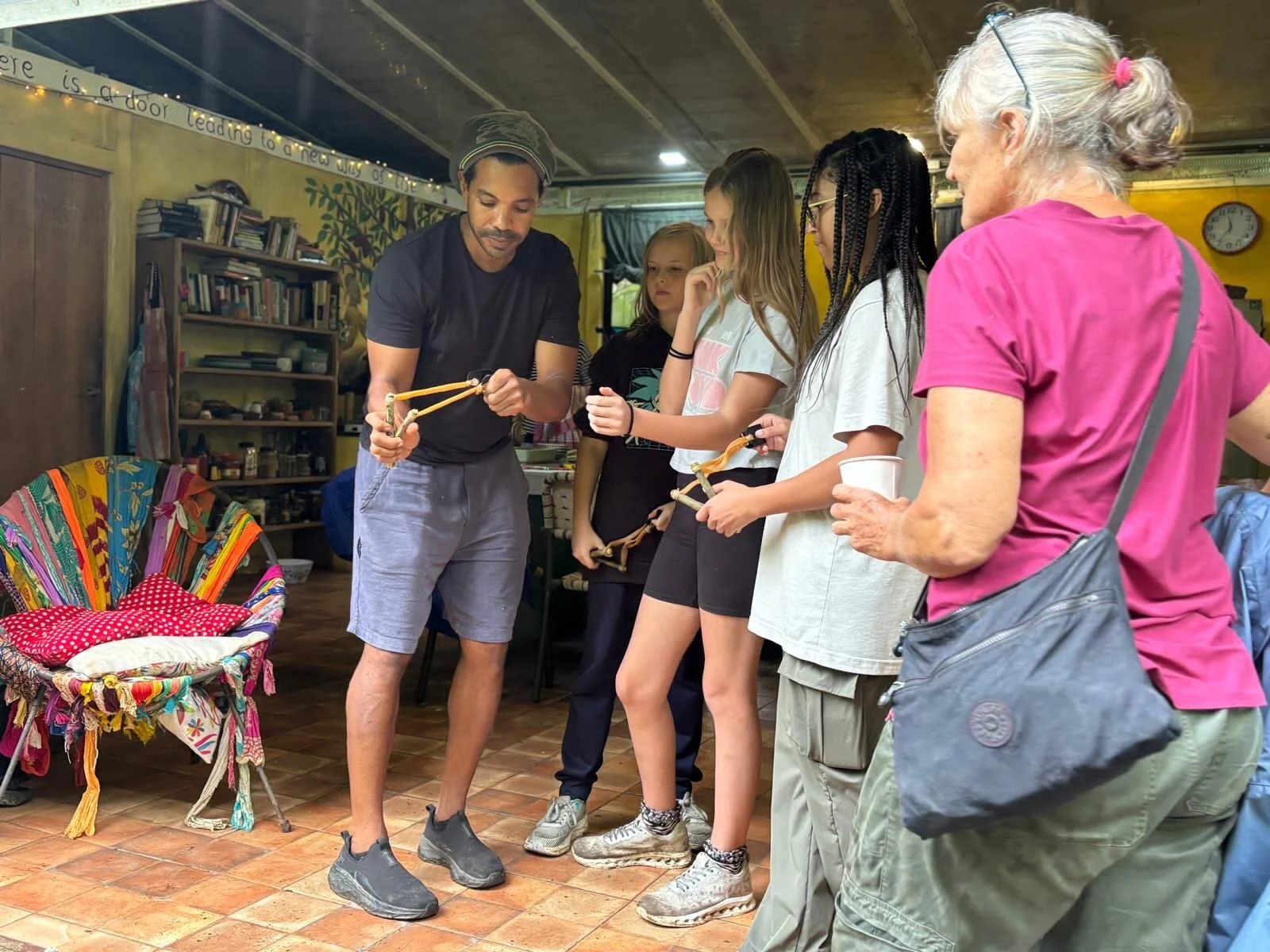
Caribbean Games Day - learning old school activities from years gone by
The Afro-Caribbean kitchen
The Caribbean coast of Costa Rica has a distinct cultural identity that is neither Latin American nor North American. It was settled largely by Afro-Caribbean migrants from Jamaica and other Caribbean islands who came to build the railroad in the late nineteenth century and stayed to build a community. The result is a culture with its own cuisine, its own music, its own dialect, its own relationship to land and sea.
Food is one of the oldest classrooms. When children cook patties — not empanadas, patties, and the distinction carries a whole story — with a woman who has been making them in this community her whole life, they are receiving a direct transmission of something that cannot be found in a curriculum guide. The spices, the technique, the conversation over the counter: this is living culture.
The coral reef and coastline
The Caribbean coast of Costa Rica sits within one of the most biodiverse marine corridors in the Western Hemisphere. The coral reefs here are working ecosystems, not tourist spectacles. Learning alongside a conservation specialist — tracking changes, recording data, understanding what a reef in 2026 is actually experiencing — is not a field trip. It is real scientific work.
Children who learn to read a reef, to understand what bleaching means and why it matters and what the specific reef in front of them is doing this season, leave with a relationship to that place. Not a fact about it. A relationship.
BriBri ancestral territory
The BriBri people have inhabited the Talamanca mountain range and Caribbean lowlands for thousands of years. Their territory is not a museum or an interpretive centre. It is a living community with its own governance, its own ceremonial life, its own agricultural systems, its own relationship to the forest that surrounds it.
Our connections to BriBri educators and community members were not built for this programme. They are the connections that come from decades of being a neighbour. When children sit with an ancestral storyteller, or walk a cacao farm with a BriBri guide, they are doing so because they were invited by someone who knows us. That changes what is possible in the room.
The rainforest canopy
Costa Rica holds roughly five percent of the world's biodiversity in less than a tenth of a percent of its landmass. On the Caribbean coast, that density is felt immediately and constantly. Sloths in the trees above the road. Poison dart frogs the colour of warning signs. The howler monkeys that announce the morning before anything else does.
Conservation is not something we teach as a subject. It is the condition of living here. Children who spend mornings working alongside a sloth biologist recording data, participating in actual field research, they are not learning about conservation. They are doing it.
Decades of living here, not visiting
There is a version of worldschooling that is well-intentioned and genuinely educational, where a programme arrives in a location, hires local experts, builds a schedule, and delivers a structured experience. Many of these programmes are excellent. We have deep respect for the families and operators running them.
We are not that. We cannot be that, because this is our home.
Our connections to Indigenous and Afro-Caribbean communities, local educators, and the rhythms of this coastline were not curated for visitors. They are simply our life here. The cacao specialist who works with children in Seeds & Stories is someone we know from the community, not someone found through a directory. The woman who teaches Afro-Caribbean cooking has been doing so her entire life, here, in this place. The marine biologist who leads coastal conservation sessions has been working this reef for years. We did not assemble a team. We introduced the people we already know.
That is what decades here gives you. Not authority over a place, but genuine belonging within it. And it is the thing that changes what children actually receive when they come here.
This is our home. That is what makes this different.
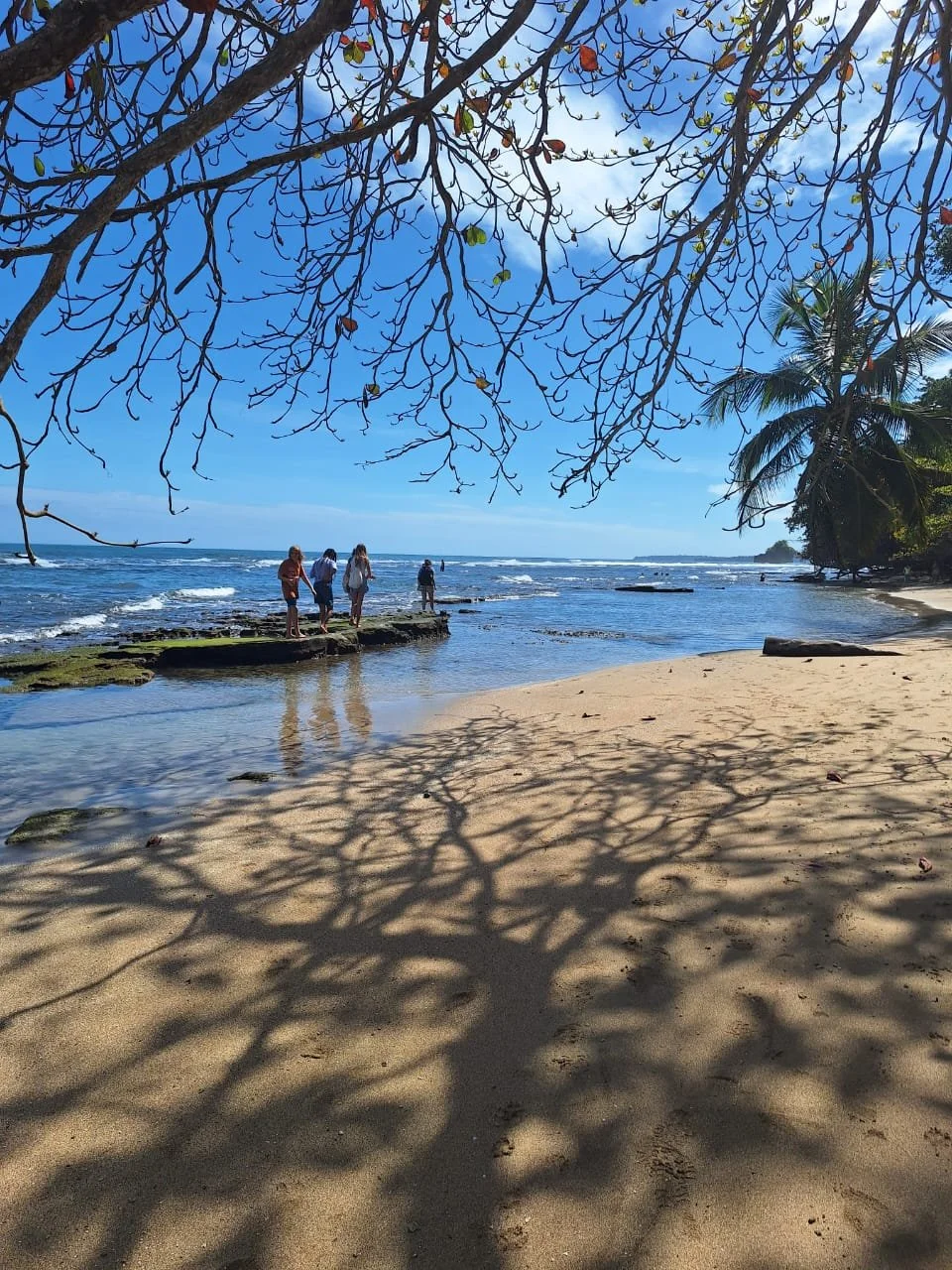
Costal Erosion and Coral Conservation session Caribbean Costa Rica
What families need to know about the Caribbean coast
We said this is not a travel guide, and we stand by that. But families making real decisions need honest logistics, and this coast is different enough from the Pacific that it is worth being clear.
Getting here
The nearest international airport is San Jose (Juan Santamaria International) in Alajuela, which receives direct flights from the US, UK, Canada, and across Latin America. From San Jose, the Caribbean coast is a four-to-five hour drive east over the Talamanca mountains, or a faster shuttle service. Alternatively you can take a 45 minute internal flight with Sansa directly to Limon followed by a shorter 1 hour transfer to our location. The drive from the capital itself is worth doing at least once , the crossing from the Central Valley down to the Caribbean lowlands is a visible shift in ecosystem, from dry coffee farms to dripping cloud forest to the sudden flat green of the Caribbean plain.
Limón city is the main arrival point on the Caribbean side, with Puerto Viejo the hub of the southern zone. From there, the Talamanca region stretches south. Road conditions vary by season and should be checked ahead of any journey.
Climate and timing
The Caribbean coast is tropical and humid year-round. Unlike the Pacific, there is no true dry season — rain can come in any month. Summer (August-September) is considered the drier period on the Caribbean side relative to the Pacific's dry season, which is counterintuitive but consistent. We run Seeds & Stories through July and early August, and Roots & Rhythms through late August and September, for this reason. Afternoons are warm. Mornings are often clear. The rain, when it comes (and it will come), is part of the experience.
What families typically do with their time
Programme sessions run mornings (Seeds & Stories: 8:30am to 1pm; Roots & Rhythms: 9am to 3pm). Afternoons are for families to explore independently , the beaches, the Cahuita National Park, the town of Puerto Viejo, the nearby farms and trails. Most families base themselves between Playa Negra and Cocles. Accommodation ranges from small guesthouses and rental houses to more established options; we are happy to share what we know about the area with families who are confirmed participants.
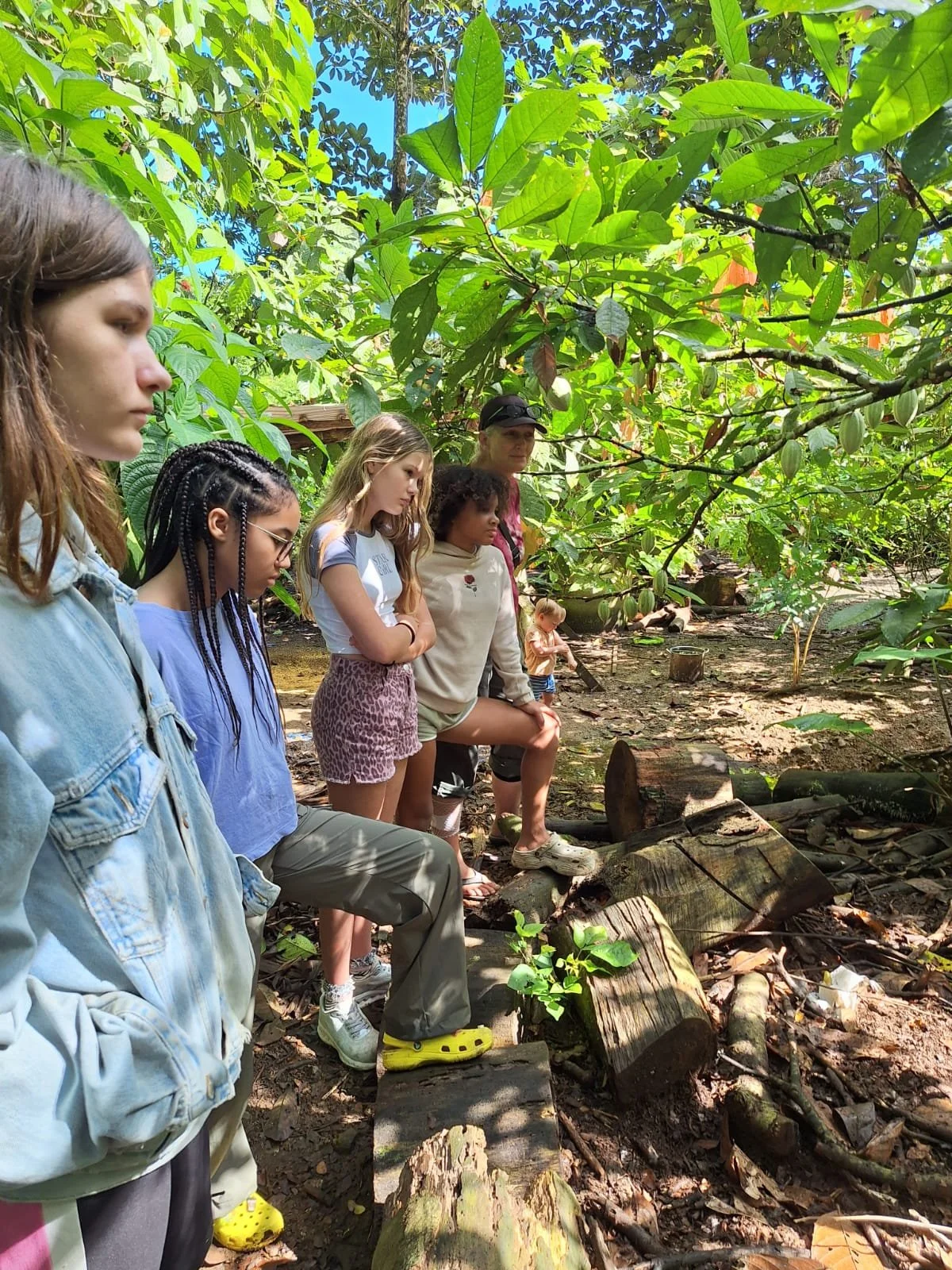
Cacao Class on Cacao Farm Talamanca
The question worth sitting with
Most families researching worldschooling in Costa Rica are asking a version of the same question: what will my child actually learn, and will it matter?
The Pacific has excellent answers to that question. So do many of the hubs and programmes operating across the Americas in 2026 and we mean that without any irony or competitive edge. There are more good options for worldschooling families now than there have ever been.
But if the answer you are looking for involves genuine cultural depth, ecological immediacy, and the kind of community connections that take decades to build rather than seasons to assemble, the Caribbean coast of Costa Rica is the answer. And specifically, this particular corner of it, at the edge of BriBri territory, where cacao grows and the coral reef begins and an Afro-Caribbean culture has been quietly, brilliantly alive for over a century.
That is what we are offering. Not a programme about this place. A programme inside it.
If you are considering worldschooling in Costa Rica and want to understand what Cacao Coast Classroom looks like in practice, the programme pages for Seeds & Stories and Roots & Rhythms are the right next step. Or reach out directly we are easier to find than the Caribbean coast suggests.
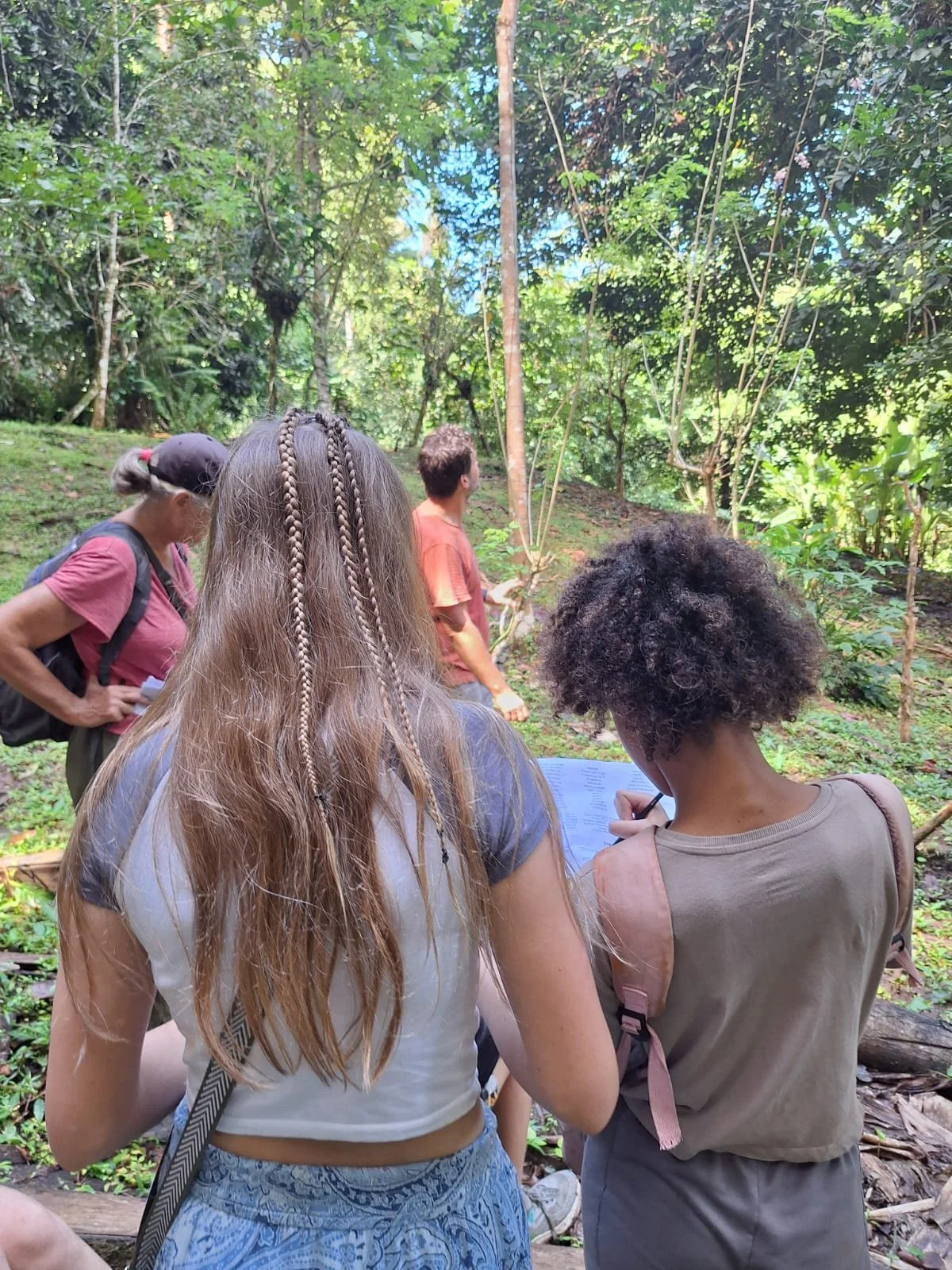
Botanical Farm and Fruit tasting session
